
Getting the right hire matters more than hiring fast because the cost of a bad hire goes far beyond time. it affects productivity, team morale, and long-term business growth. While filling a vacancy quickly may seem urgent, rushing recruitment often leads to mismatches that cost employers more to fix later.
In Uganda’s competitive job market, smart employers are shifting from speed-focused hiring to quality-driven recruitment that prioritizes skills, cultural fit, and long-term performance.
Table of Contents
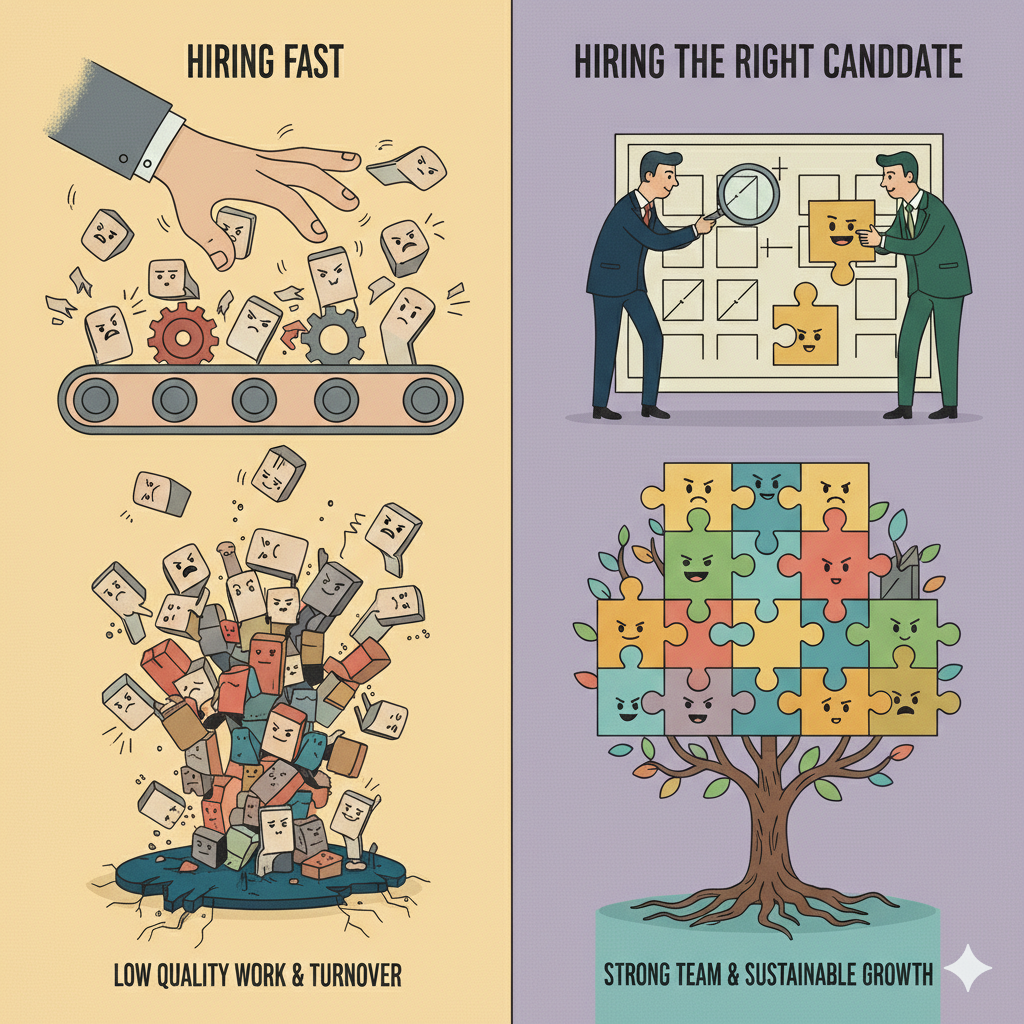
What happens when companies prioritize speed over the right hire?
Hiring fast can feel productive, but when done without proper screening, it often leads to avoidable setbacks.
- Increased employee turnover within the first 6–12 months
- Lower team productivity due to skill gaps
- Higher recruitment and retraining costs
- Negative impact on company culture and morale
According to insights from the Mastercard Foundation, young people placed in roles aligned to their skills and career paths are significantly more likely to remain employed and perform better over time.
Why the right hire delivers better long-term business results
When employers focus on hiring the right candidate, not just the available one, they unlock measurable advantages:
- Stronger employee engagement and accountability
- Faster onboarding and ramp-up time
- Improved retention and reduced rehiring costs
- Better customer experience and team collaboration
On BrighterMonday Uganda, employers who use structured job listings and skill-based screening tools consistently report higher quality applicants and better hiring outcomes.
Related reading:
- How to Write a Job Description That Attracts the Right Candidates
- Common Recruitment Mistakes Employers Make in Uganda
- Browse Verified Job Listings in Uganda
What data from Mastercard Foundation campaigns shows about hiring right
Through Mastercard Foundation supported employment programs across Africa, including Uganda:
- Youth placed in skill-matched roles showed higher job retention
- Employers reported improved performance when hiring followed structured screening
- Soft skills and role clarity were key success factors
These insights reinforce a simple truth: effective hiring is not about speed, it’s about alignment.

How employers in Uganda can hire right without slowing down
Hiring right does not mean hiring slowly. It means hiring intentionally.
- Use clear, skill-focused job descriptions
- Screen candidates based on competencies not just CVs
- Leverage platforms that verify candidates and roles
- Involve hiring managers early to assess fit
Employers using BrighterMonday Uganda’s job posting tools can attract pre-screened candidates fasterwithout sacrificing quality.
Hear directly from employers and job seekers
This testimonial from BrighterMonday Uganda’s YouTube channel highlights how proper job matching improves outcomes for both employers and candidates. https://www.youtube.com/embed/VIDEO_ID_HERE
TL;DR:
- Hiring fast increases the risk of bad hires
- The right hire improves retention, productivity, and culture
- Skill-based, structured hiring delivers better long-term results
Frequently Asked Questions
Why is hiring the right person more important than hiring fast?
Hiring the right person reduces turnover, improves productivity, and lowers long-term recruitment costs compared to rushed hiring decisions.
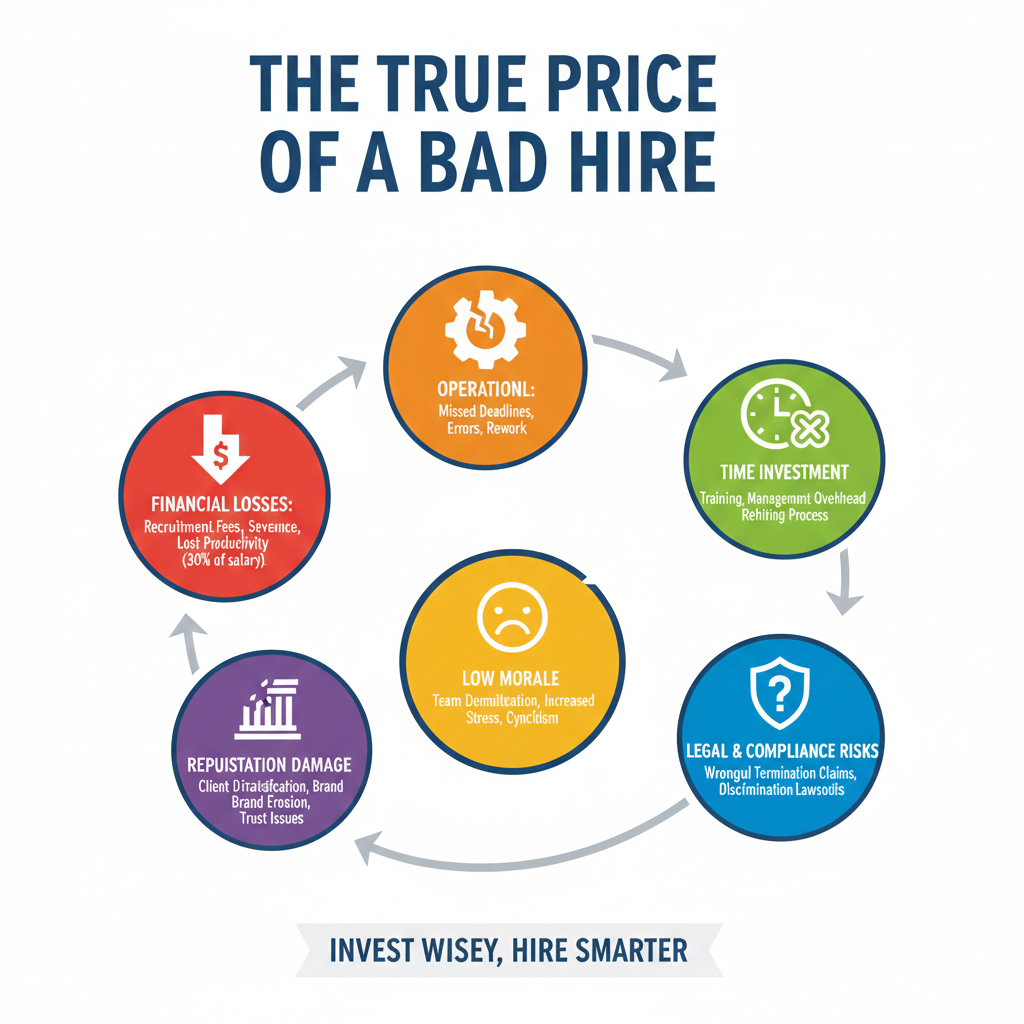
What is the cost of a bad hire in Uganda?
A bad hire can cost employers months of lost productivity, rehiring expenses, and team disruption—often exceeding the original recruitment cost.
How can employers hire right without delaying recruitment?
Using structured job descriptions, skill-based screening, and verified recruitment platforms helps employers hire right without slowing down.